

The Oneview Fleet Systems Fuel Solution allows fleets to keep an eye on fuel usage, cut down on waste, and boost overall efficiency with real-time data and smart insights. By monitoring fuel consumption, driving habits, and vehicle performance, Oneview empowers businesses to manage one of their biggest operating costs.
Get Started Now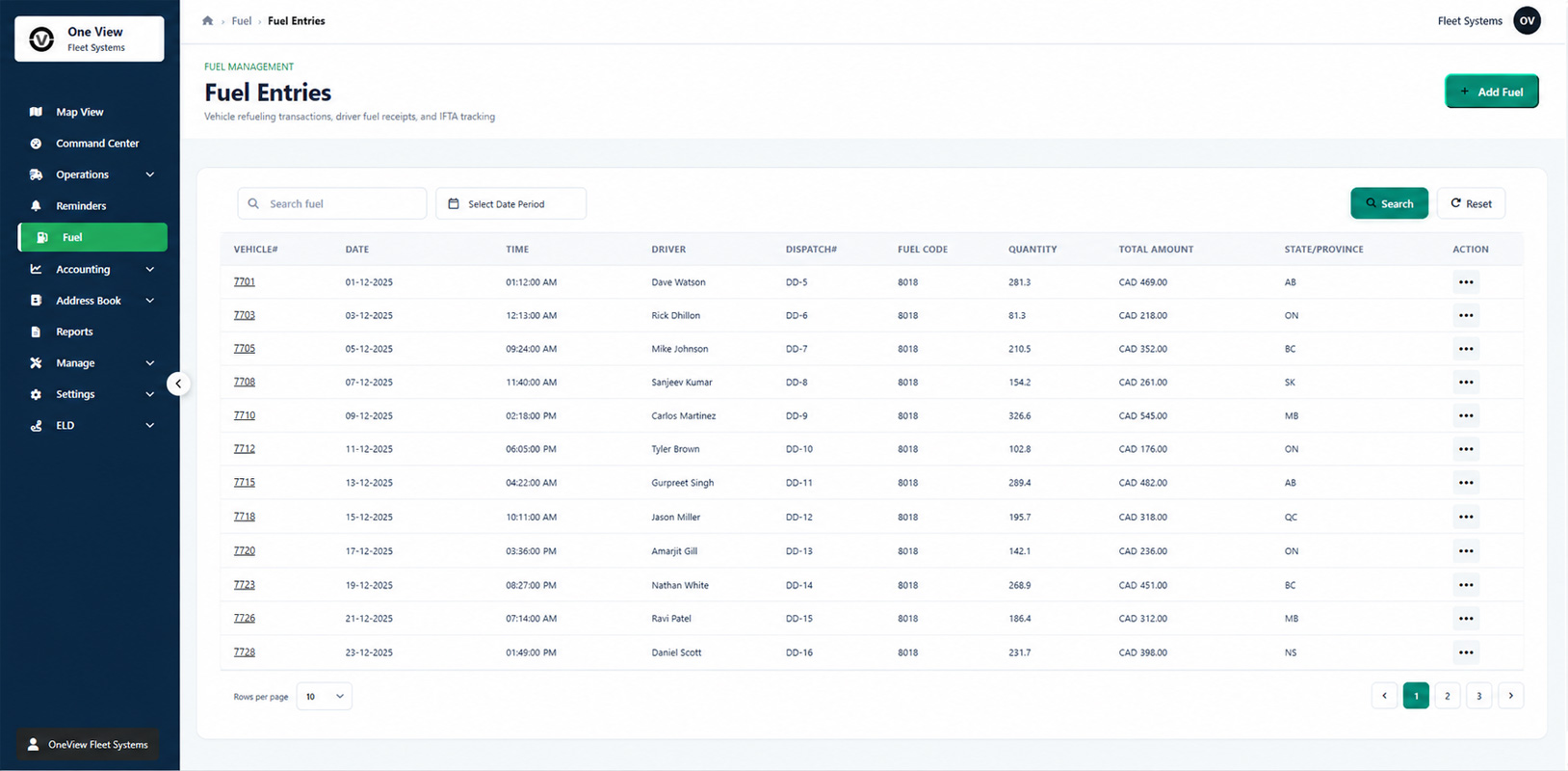
Fuel represents one of the most substantial and recurring operational expenditures for numerous trucking, transportation, delivery, and commercial vehicle fleets. Every vehicle traversing the roadways consumes fuel, and as fleet dimensions and mileage accumulate, even modest fluctuations in vehicle operations can meaningfully impact overall fuel expenditures.
Optimizing fuel consumption transcends the mere compilation of receipts during month-end reconciliation.
Enhanced intelligence empowers organizations with a more robust framework for discerning how fuel is being deployed throughout their entire fleet operations.

Fleet managers must possess comprehensive insight into the operational dynamics underlying fuel consumption: the distances vehicles traverse, their utilization patterns, the assignments they undertake, their geographic territories, and how fuel-related metrics integrate with broader business operations.
OneView Fleet Systems elevates fleet fuel management by seamlessly integrating GPS tracking, vehicle telematics, mileage analytics, trip documentation, dispatch coordination, IFTA-related procedures, maintenance protocols, and comprehensive fleet reporting within an expansive technological ecosystem.
OneView Fleet Systems provides sophisticated GPS vehicle tracking capabilities that empower authorized users to maintain comprehensive visibility into fleet operations.
For instance, variations in fuel consumption between two vehicles become considerably more transparent when the organization can simultaneously evaluate the distances traversed and the nature of activities undertaken.
This is precisely why integrated fleet intelligence proves substantially more valuable than examining fuel expenditures independently.

Get a clear view of how fuel is being utilized throughout your fleet.
The distance traversed represents one of the most essential metrics employed in the assessment of fleet fuel consumption dynamics.
Merely observing that a particular vehicle has expended greater quantities of fuel than its counterpart fails to furnish sufficient analytical insight.
The initial vehicle may have traversed considerably more extensive distances.
GPS and telematics technology enable enterprises to systematically consolidate mileage intelligence across their commercial vehicle portfolios.
Integrating distance metrics with fuel consumption records establishes a more sophisticated framework for evaluating fuel efficiency performance throughout extended periods.
Fleet administrators can subsequently examine substantive performance variations rather than engaging in superficial fuel consumption comparisons that disregard operational vehicle activity.
Telematics delivers an expansive perspective on interconnected vehicle intelligence.
Contingent upon the vehicle's specifications, integrated hardware infrastructure, available sensor technology, and system architecture, telematics facilitates the provision of sophisticated data encompassing vehicle dynamics, journey documentation, distance traversal, and additional monitored operations.
OneView Fleet Systems seamlessly integrates vehicle telematics with comprehensive fleet-management solutions.
This sophisticated integration empowers enterprises to assess fuel-related metrics in concert with the operational activities unfolding throughout their fleet.
The precise fuel and engine intelligence accessible will be determined by compatible vehicle platforms, hardware specifications, system integrations, and customized configuration parameters.
Fleet fuel management is the process of organizing, monitoring, and analyzing fuel-related information across commercial vehicles while considering mileage, trips, vehicle activity, maintenance, and other operational factors.
Fuel can represent a significant recurring operating expense. Better visibility can help businesses understand how fuel use relates to vehicle activity and identify patterns that deserve further investigation.
Yes. GPS information can provide mileage, location, trip, and vehicle-activity context that can be reviewed alongside fuel records.
Certain compatible vehicles, telematics devices, and integrations may provide fuel or engine-related information. Available data depends on the vehicle, hardware, connection, and system configuration.
Compatible telematics configurations may provide idling-related vehicle information. Fleet managers should evaluate the operational context because some idling may be necessary.
OneView Fleet Systems provides GPS and trip information that can support mileage organization for applicable IFTA reporting workflows. Carriers remain responsible for maintaining appropriate records and accurate filings.
Vehicle condition can influence operation, which is why fuel analysis should be considered alongside proper maintenance, inspections, tires, servicing, and other relevant factors.
No. Delivery companies, contractors, transportation businesses, service fleets, logistics companies, and other organizations operating commercial vehicles can benefit from better fuel visibility.
No. Technology can provide information that helps businesses identify patterns and make informed decisions, but actual fuel costs depend on many factors including prices, mileage, vehicle type, operating conditions, routes, payload, maintenance, and management decisions.
Useful information may include fuel purchases, mileage, trip activity, vehicle utilization, supported idling data, maintenance history, routes, operating conditions, and overall cost information.
Fuel is more than a line on an expense report.
It is connected to every kilometre or mile your commercial vehicles travel.
Understanding fuel therefore requires understanding the operation behind it.
OneView Fleet Systems supports fleet fuel management by connecting GPS tracking, telematics, mileage, trips, dispatch, maintenance, IFTA-related workflows, drivers, and fleet reporting.
See how vehicles are operating. Connect mileage with fuel information. Review trip activity. Understand utilization. Investigate relevant patterns. Bring maintenance and operational context into fuel-management decisions.
Whether you operate long-haul trucks, regional transportation, delivery vehicles, or a growing commercial fleet, OneView provides connected technology designed to give your team greater operational visibility.
Understand the miles. Understand the operation. Manage fleet fuel with OneView Fleet Systems.
Contact OneView Fleet Systems to discuss GPS, telematics, fuel-management visibility, and connected fleet technology.